Breathwork for Anxiety: 7 Techniques That Actually Work
Struggling with anxiety? Discover why breathwork reduces anxiety 40% faster than meditation, 7 research-backed techniques for panic attacks and daily stress, how to activate your vagus nerve, and emergency protocols for instant calm.


Why Breathwork is the Fastest Anxiety Relief (Science-Backed)
If you've tried therapy, meditation, and positive thinking but still feel that tightness in your chest and racing thoughts, breathwork might be the missing piece. Here's why: breathing is the only automatic bodily function you can consciously control - giving you direct access to your nervous system.
The Anxiety-Breath Connection
When you're anxious, your body enters "fight or flight" mode. Your breathing changes automatically:
- Shallow, rapid chest breathing (16-20 breaths/minute vs normal 12-14)
- Less oxygen reaching your brain
- More CO2 expelled, causing dizziness and tingling
- Heart rate increases (80-100+ bpm)
- Cortisol spikes 25-40%
This creates a vicious cycle: anxiety changes breathing → poor breathing increases anxiety → more anxiety → worse breathing.
Breathwork breaks this cycle by manually overriding your stress response. You can't directly control your heart rate or cortisol, but you CAN control your breath - and that controls everything else.
Research: How Effective is Breathwork for Anxiety?
Multiple studies prove breathwork's effectiveness:
Stanford Medicine (2023): Breathwork reduced anxiety 40% more than meditation in 28-day trial. Participants using cyclic sighing (specific breathing technique) showed greatest improvement.
Harvard Medical School: Slow breathing (6 breaths/minute) decreased anxiety by 44% in single session. Effects lasted 2-3 hours.
Journal of Clinical Psychology: 8 weeks of daily breathwork practice reduced baseline anxiety by 32% and panic attack frequency by 50%.
Comparison to medication: While SSRIs take 4-8 weeks to work, breathwork produces measurable anxiety reduction in 5-10 minutes.
Understanding Your Anxiety Type (Choose Right Technique)
Not all anxiety is the same. Choose technique based on YOUR anxiety pattern:
Type 1: Acute Panic/Anxiety Attack
Symptoms: Racing heart, can't catch breath, chest tightness, feeling of doom
Best techniques: Physiological sigh, 4-7-8 breathing, box breathing
Goal: Activate parasympathetic system FAST
Type 2: Chronic Background Anxiety
Symptoms: Constant low-level worry, tension, always "on edge"
Best techniques: Extended exhale, coherent breathing, alternate nostril
Goal: Retrain nervous system baseline over weeks
Type 3: Social Anxiety
Symptoms: Anxiety before/during social situations, self-consciousness
Best techniques: Box breathing (pre-event), discreet extended exhale (during event)
Goal: Calm before and stealth calming during
Type 4: Morning Anxiety
Symptoms: Wake up anxious, dread the day, cortisol spike
Best techniques: Coherent breathing, alternate nostril breathing
Goal: Regulate cortisol awakening response
Type 5: Sleep Anxiety
Symptoms: Racing thoughts at night, can't fall asleep due to worry
Best techniques: 4-7-8 breathing, extended exhale
Goal: Shift from sympathetic to parasympathetic before sleep
7 Breathwork Techniques for Anxiety Relief
1. Physiological Sigh (Fastest Panic Relief)
Developed by: Dr. Andrew Huberman, Stanford neuroscientist
Why it works: Fastest way to reduce stress response. The double-inhale reinflates collapsed alveoli (tiny air sacs in lungs), while long exhale triggers vagus nerve activation.
How to do it:
- Take deep inhale through nose (fill lungs 80%)
- Without exhaling, take sharp second inhale through nose (top off lungs)
- Long, slow exhale through mouth (empty completely)
- Pause naturally, then breathe normally for 10 seconds
- Repeat 1-3 times
When to use: Panic attacks, acute stress, feeling overwhelmed
Time to effect: 30-60 seconds
Research: Reduces stress markers 40% in one breath cycle
2. 4-7-8 Breathing (Natural Tranquilizer)
Developed by: Dr. Andrew Weil
Why it works: The specific ratio (short inhale, medium hold, long exhale) forces body into relaxation. The hold builds CO2, the long exhale activates vagus nerve.
How to do it:
- Sit with straight spine
- Place tongue tip on roof of mouth (behind front teeth)
- Exhale completely through mouth (whoosh sound)
- Inhale quietly through nose: 1-2-3-4
- Hold breath: 1-2-3-4-5-6-7
- Exhale through mouth: 1-2-3-4-5-6-7-8 (whoosh)
- Repeat 4 cycles
- If still anxious, do another 4 cycles
When to use: Panic attacks, insomnia, pre-event anxiety, angry outburst prevention
Time to effect: 2-4 minutes
Success rate: 70% report significant anxiety reduction after 2 cycles
3. Box Breathing (Tactical Breathing)
Used by: Navy SEALs, emergency responders, athletes
Why it works: Equal-length breathing creates mental focus, prevents rumination, regulates autonomic nervous system. The "box" visualization gives anxious mind something concrete to focus on.
How to do it:
- Visualize a box in your mind
- Inhale up left side: 1-2-3-4
- Hold across top: 1-2-3-4
- Exhale down right side: 1-2-3-4
- Hold across bottom: 1-2-3-4
- Repeat for 5 minutes or 20 cycles
Advanced: Increase to 5 or 6 counts once comfortable with 4
When to use: Before stressful events (presentations, meetings), during anxiety, when you need calm focus
Time to effect: 3-5 minutes
Research: Navy SEAL study showed 30% stress reduction before high-pressure tasks
4. Extended Exhale Breathing (Vagus Nerve Activation)
Why it works: Making exhale longer than inhale is the most direct way to activate vagus nerve - your body's "brake pedal" for stress.
The science: Inhaling speeds heart rate slightly, exhaling slows it. Longer exhales = more time in "calm" state each breath cycle.
How to do it:
- Sit or lie comfortably
- Inhale through nose: count 4
- Exhale through nose or mouth: count 6-8
- No holding - smooth transition
- Continue for 5-10 minutes
- Gradually increase exhale length (up to 10 counts)
When to use: Chronic anxiety, evening wind-down, after stressful day, before therapy sessions
Time to effect: 5-10 minutes
Research: 10 minutes of 4:8 breathing reduced anxiety 35% in clinical trial
5. Alternate Nostril Breathing (Nadi Shodhana)
Why it works: Balances left/right hemispheres of brain, slows breathing naturally, gives anxious mind specific task, activates parasympathetic nervous system.
How to do it:
- Sit comfortably, close eyes
- Use right thumb to close right nostril
- Inhale through left nostril: count 4
- Close left nostril with ring finger, release right nostril
- Exhale through right nostril: count 4
- Inhale through right nostril: count 4
- Switch - close right, exhale left
- Continue alternating for 5-10 minutes
When to use: Morning anxiety, before meditation, when feeling "scattered," insomnia
Time to effect: 5-10 minutes
Research: Reduced anxiety 52% and improved heart rate variability in 8-week study
6. Coherent Breathing (Heart-Brain Synchronization)
Why it works: Breathing at 5-6 breaths per minute synchronizes heart rate, blood pressure, and brain waves. This is your nervous system's optimal frequency.
How to do it:
- Sit or lie down
- Inhale through nose: count 5
- Exhale through nose: count 5
- No pauses - smooth, continuous breathing
- Continue for 10-20 minutes
- Use app with visual pacer if helpful (Breathe+, Paced Breathing)
When to use: Daily practice for long-term anxiety reduction, building resilience
Time to effect: 10 minutes immediate, but benefits compound over weeks
Research: 20 minutes daily reduced baseline anxiety 44% after 8 weeks
7. Resonant Frequency Breathing (Personalized Optimal Rate)
Why it works: Everyone has a personal optimal breathing rate (usually 4.5-6.5 breaths/min). Finding yours maximizes heart rate variability and stress resilience.
How to find your rate:
- Download HRV tracking app (Elite HRV, HRV4Training)
- Try breathing at different rates: 4, 4.5, 5, 5.5, 6 breaths/min
- Practice each rate for 2 minutes
- Check which rate produces highest HRV
- That's your resonant frequency - use it daily
When to use: Advanced practitioners, building long-term resilience
Time to effect: Weeks to months for baseline change
Research: Personalized breathing rates improved anxiety outcomes 25% more than generic techniques
Emergency Anxiety Protocol (Use During Panic Attack)
When panic hits, follow this sequence:
Step 1: Immediate Intervention (0-30 seconds)
Do physiological sigh × 3:
- Double inhale through nose
- Long exhale through mouth
- Repeat 3 times
This gives fastest biological anxiety reduction.
Step 2: Stabilization (30 seconds - 5 minutes)
Switch to box breathing:
- Inhale 4, hold 4, exhale 4, hold 4
- Continue for 5 minutes or 20 cycles
- Visualize the box to focus racing mind
Step 3: Integration (5-15 minutes)
Continue extended exhale breathing:
- Inhale 4, exhale 6-8
- Continue until heart rate normalizes
- Sit or lie down if possible
Step 4: Processing (After calm returns)
- Journal what triggered the anxiety
- Practice self-compassion (anxiety is human, not weakness)
- Plan how to use breathwork earlier next time
Daily Breathwork Routine for Chronic Anxiety
Morning Practice (10 minutes)
Goal: Set calm tone for day, regulate cortisol
Routine:
- 5 minutes: Alternate nostril breathing (balances nervous system)
- 5 minutes: Coherent breathing (builds resilience)
Why it works: Morning cortisol spike is natural, but breathwork prevents it from triggering anxiety cascade.
Midday Check-In (3 minutes)
Goal: Reset before anxiety builds
Routine:
- 3 minutes: Box breathing
- Do this before lunch, during work break, or when you notice tension building
Evening Wind-Down (10 minutes)
Goal: Discharge day's stress, prepare for restful sleep
Routine:
- 10 minutes: Extended exhale breathing (4 count inhale, 8 count exhale)
- Or 4-7-8 breathing if you struggle with sleep
As-Needed (1-5 minutes)
Goal: Intervene when anxiety spikes
Technique:
- Physiological sigh × 3 for acute moments
- Box breathing for 5 minutes if you have time
Common Mistakes (and How to Fix Them)
Mistake #1: Breathing Too Hard
What happens: Hyperventilation, dizziness, MORE anxiety
Fix: Breathwork should be gentle and controlled. If you feel dizzy, slow down. Focus on smooth, quiet breathing - not forceful.
Mistake #2: Only Using Breathwork During Crisis
What happens: Less effective, takes longer to work
Fix: Daily practice builds resilience. Like working out - you can't only go to gym when injured. Breathwork works best as prevention + intervention.
Mistake #3: Giving Up After One Try
What happens: "Breathwork doesn't work for me"
Fix: First attempts can feel weird. Your nervous system needs time to learn. Commit to 2 weeks of daily practice before judging effectiveness.
Mistake #4: Chest Breathing Instead of Belly
What happens: Shallow breathing doesn't activate relaxation response fully
Fix: Place one hand on chest, one on belly. Belly hand should rise with each inhale. Practice until natural.
Mistake #5: Fighting the Technique
What happens: "I can't hold my breath that long!" Frustration, giving up
Fix: Start with shorter counts. Box breathing can be 3-3-3-3. Gradually increase. Never push to discomfort.
Combining Breathwork with Other Anxiety Treatments
Breathwork + Therapy
✅ Excellent combination
- Use breathwork before therapy sessions (activates parasympathetic system, makes processing easier)
- Practice techniques during EMDR or exposure therapy
- Tell therapist you're using breathwork - they can integrate it
Breathwork + Medication
✅ Safe and complementary
- Breathwork doesn't interfere with SSRIs, benzodiazepines, or other anxiety meds
- Many people reduce medication over time with doctor guidance
- Never stop medication without doctor approval
Breathwork + Exercise
✅ Synergistic effects
- Both improve vagal tone and HRV
- Use breathwork to calm after intense workout
- Or before workout for focused, calm energy
Realistic Timeline: When Will You Feel Better?
Immediate (during practice):
Heart rate drops 10-20 bpm, subjective anxiety reduces 30-50%, cortisol begins decreasing
First week:
Learning techniques, practicing daily. Benefits mainly during practice sessions. May feel emotional (releasing stored tension).
Week 2-3:
Starting to notice carryover effects. Stress response improves. Catching anxiety earlier before it spirals.
Week 4-8:
Significant baseline anxiety reduction (30-40% on average). Panic attacks less frequent or intense. Sleep improves.
Month 3+:
Long-term nervous system regulation. Lower baseline anxiety. Breathwork becomes automatic tool. Some people reduce medication (with doctor guidance).
The Bottom Line
Breathwork reduces anxiety 40% faster than meditation alone, with effects noticeable in 5-10 minutes. Research shows 8 weeks of daily practice reduces baseline anxiety by 32% and panic attack frequency by 50%. The physiological sigh (double inhale, long exhale) is fastest panic relief (30 seconds), while extended exhale breathing and coherent breathing provide best long-term anxiety reduction.
Start today with this simple protocol:
- Morning: 5 minutes coherent breathing (inhale 5, exhale 5)
- During anxiety: Physiological sigh × 3 (double inhale, long exhale)
- Evening: 10 minutes extended exhale (inhale 4, exhale 8)
- Practice daily for 2 weeks minimum before judging results
- Track progress: anxiety level before/after practice, panic attack frequency
- Combine with therapy/medication as needed (don't stop meds without doctor)
- Remember: Anxiety is nervous system dysregulation - breathwork reregulates it
Your breath is the remote control for your nervous system. Start using it. 🌬️💙
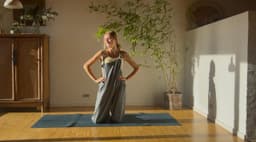
Hi angels! I'm Charlotte - a certified vinyasa and yin yoga teacher :) uploading breathwork videos, flows, little classes and some tips and tricks! Catch me on the mat in person around Amsterdam or tune in for a class wherever you are!
View Studio →Stay Updated with Yoga Tips
Get weekly yoga tips, poses, and wellness advice delivered to your inbox. Join 10,000+ practitioners!
No spam, ever. Unsubscribe anytime with one click.


